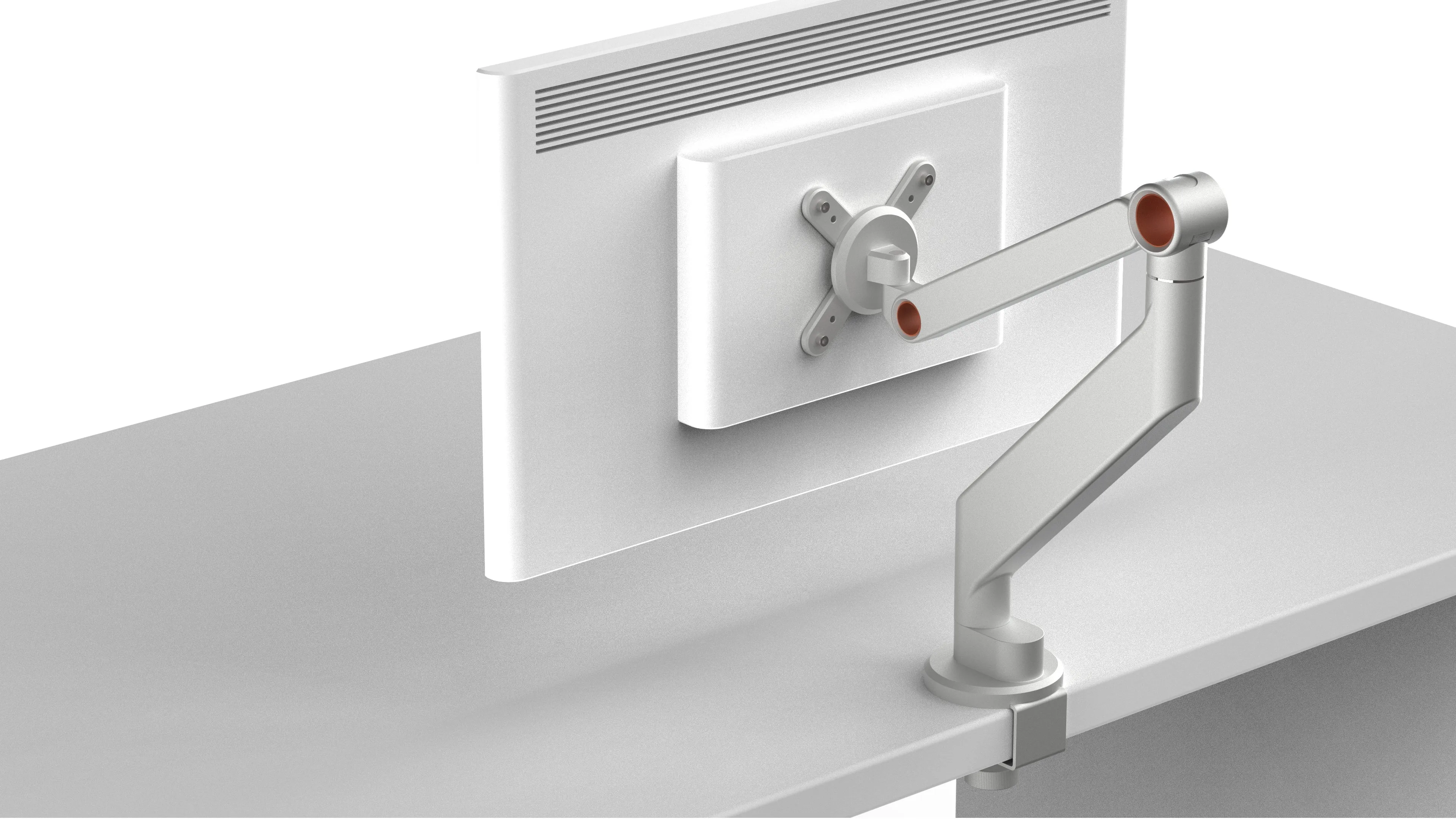
Dual-arm monitor mount · Industrial Design · B2B2B
Form without
architecture.
The structure failed.
This is not a success story. It is a structural argument — for why architecture must precede form, and what happens when it doesn't.
The form
A precision instrument.
Visually, it works.
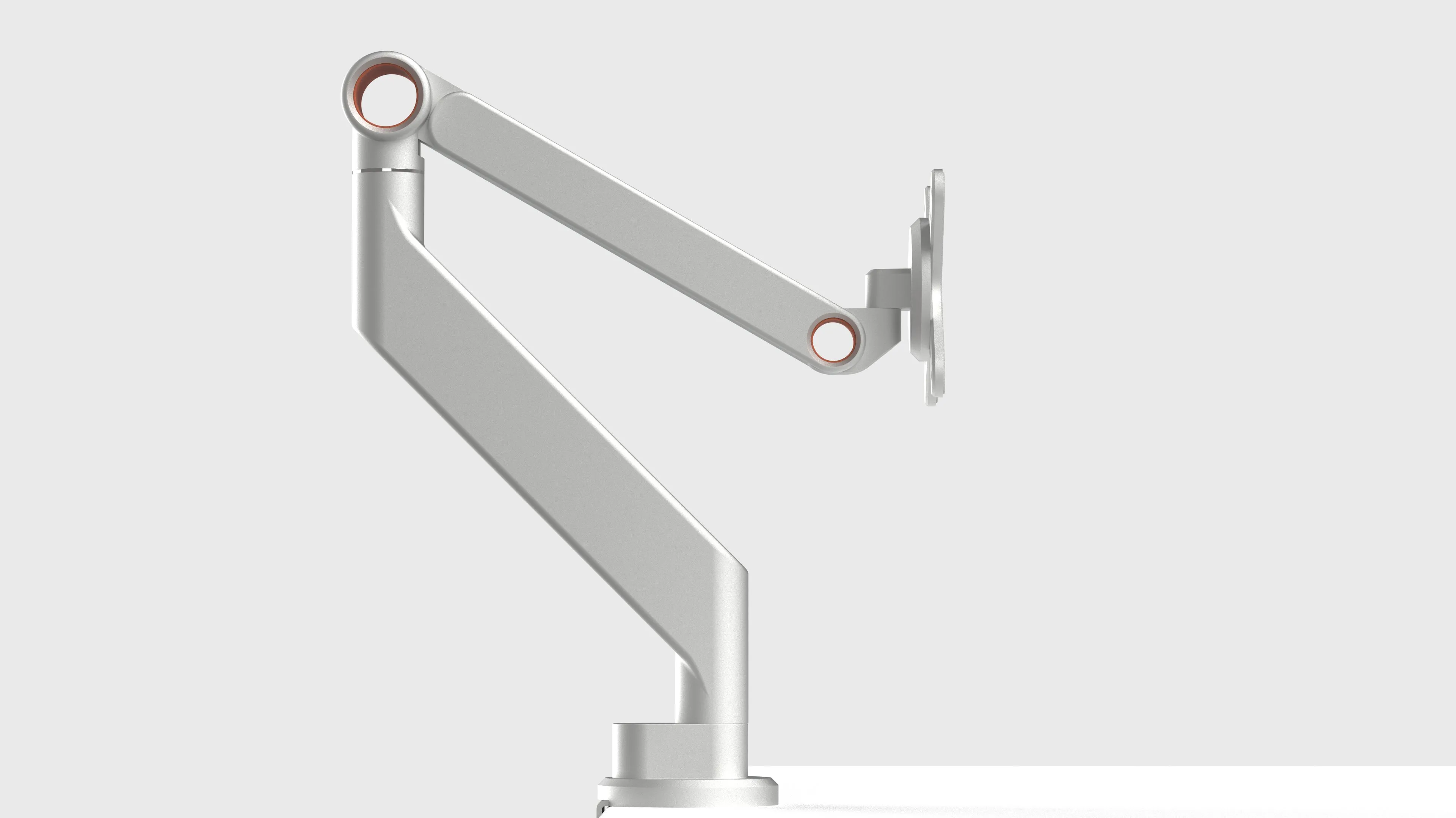
The form language is clean, instrument-grade, and resolved. A Z-form lower arm, a single-span upper arm, hollow ring joints marking the rotational axes. The silhouette reads with purpose.
The visual design does exactly what it was asked to do. That is not the problem.
§02 — The joints
One design language. Two pivot points.
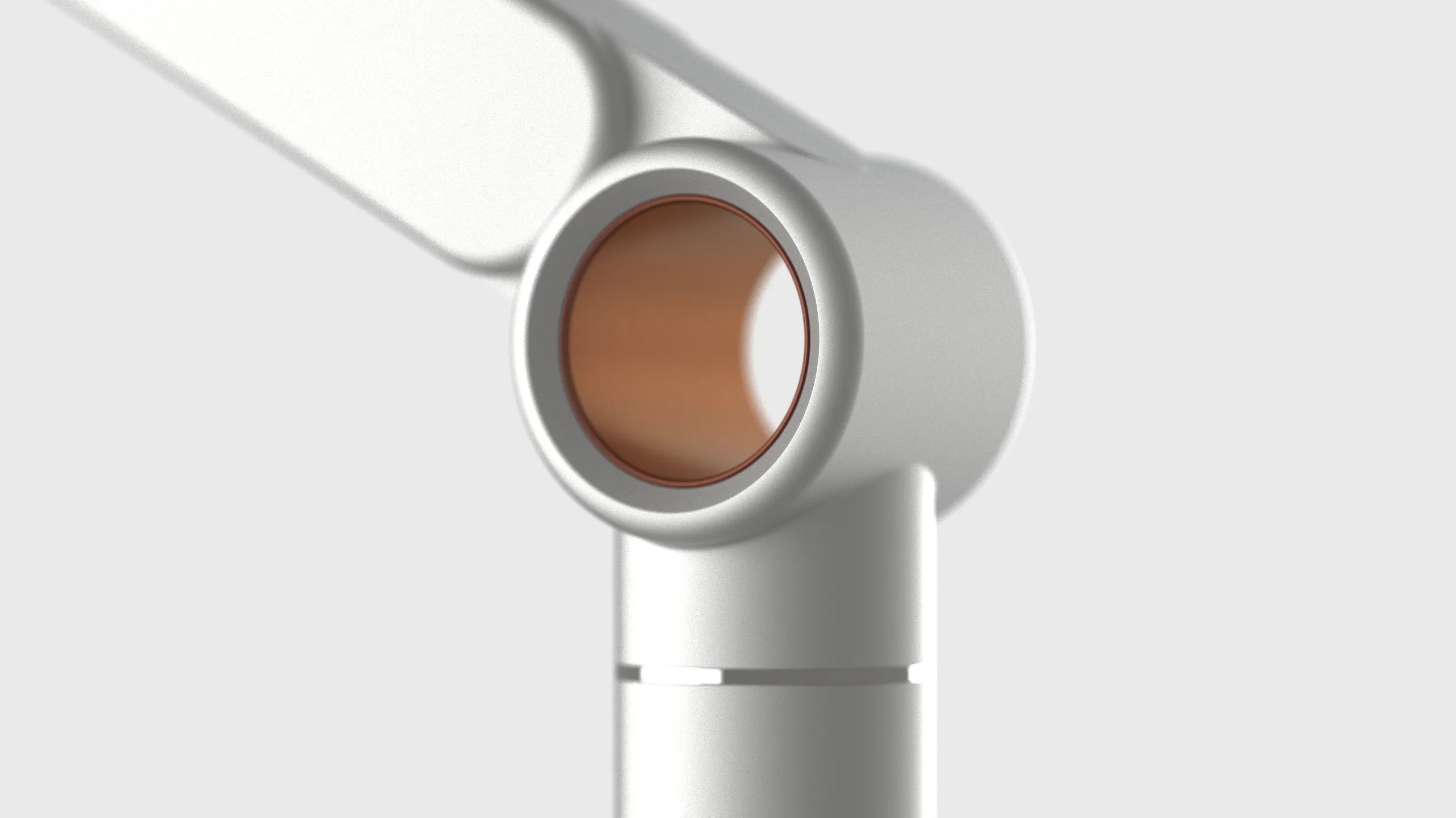
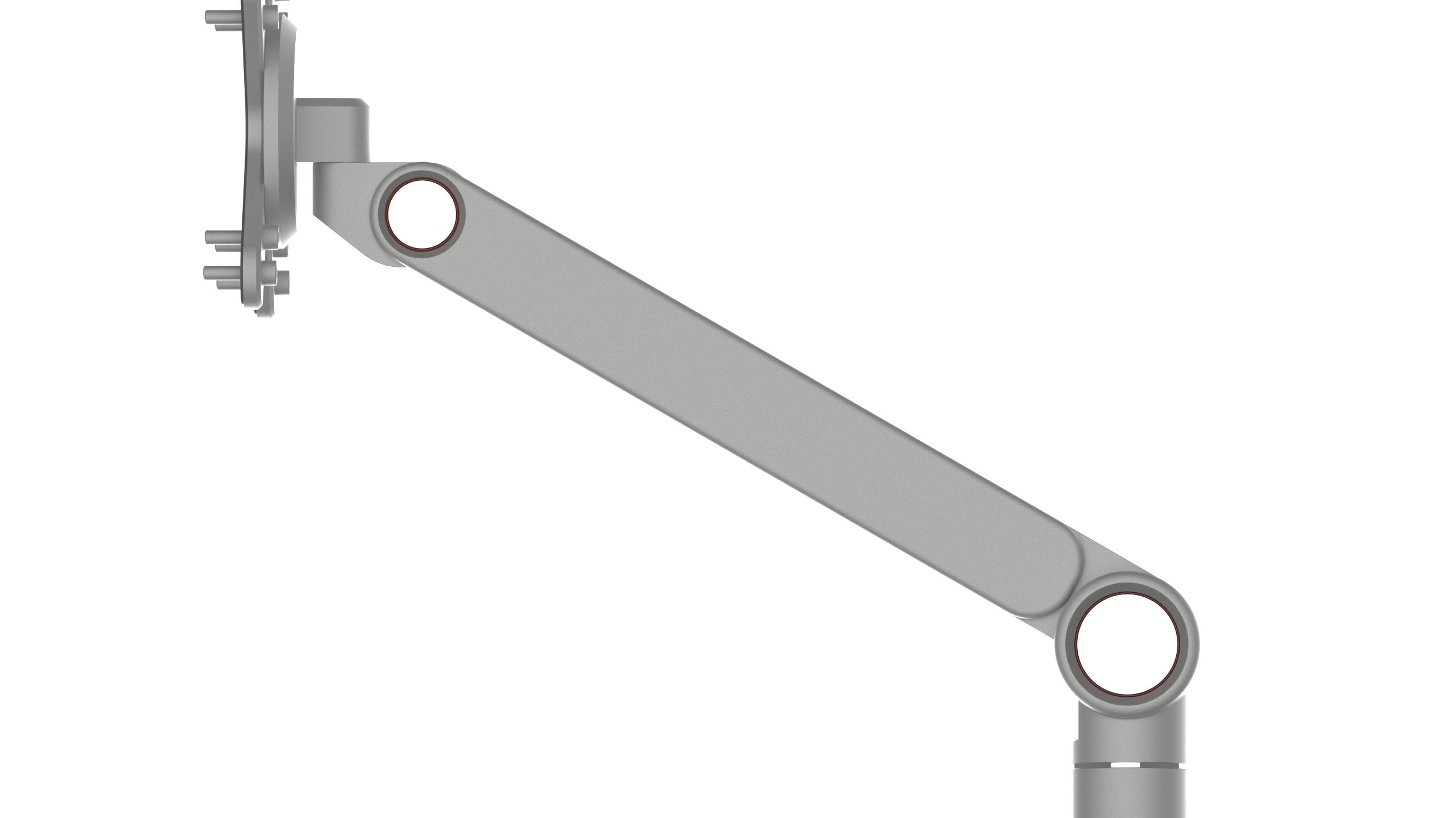
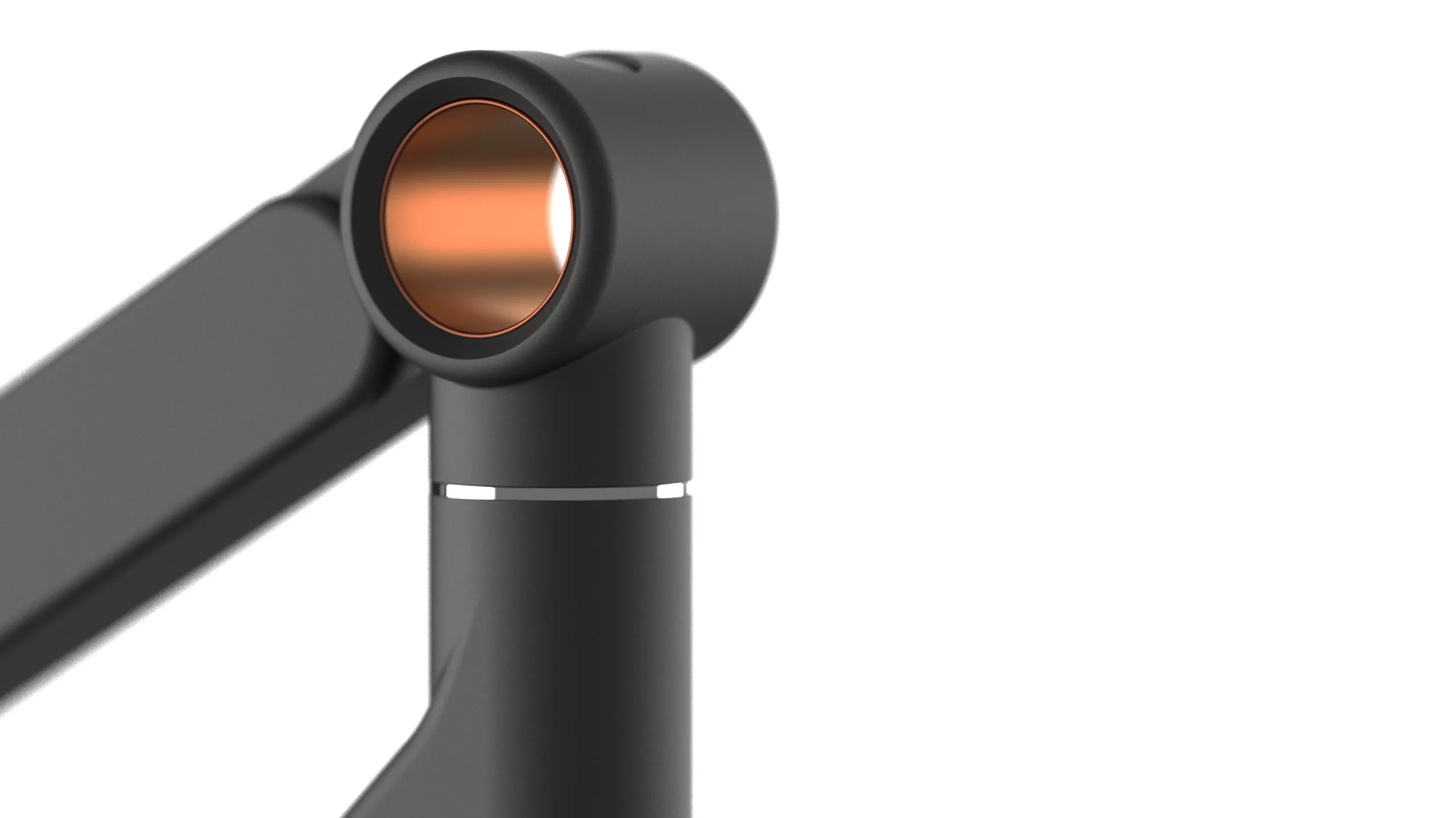
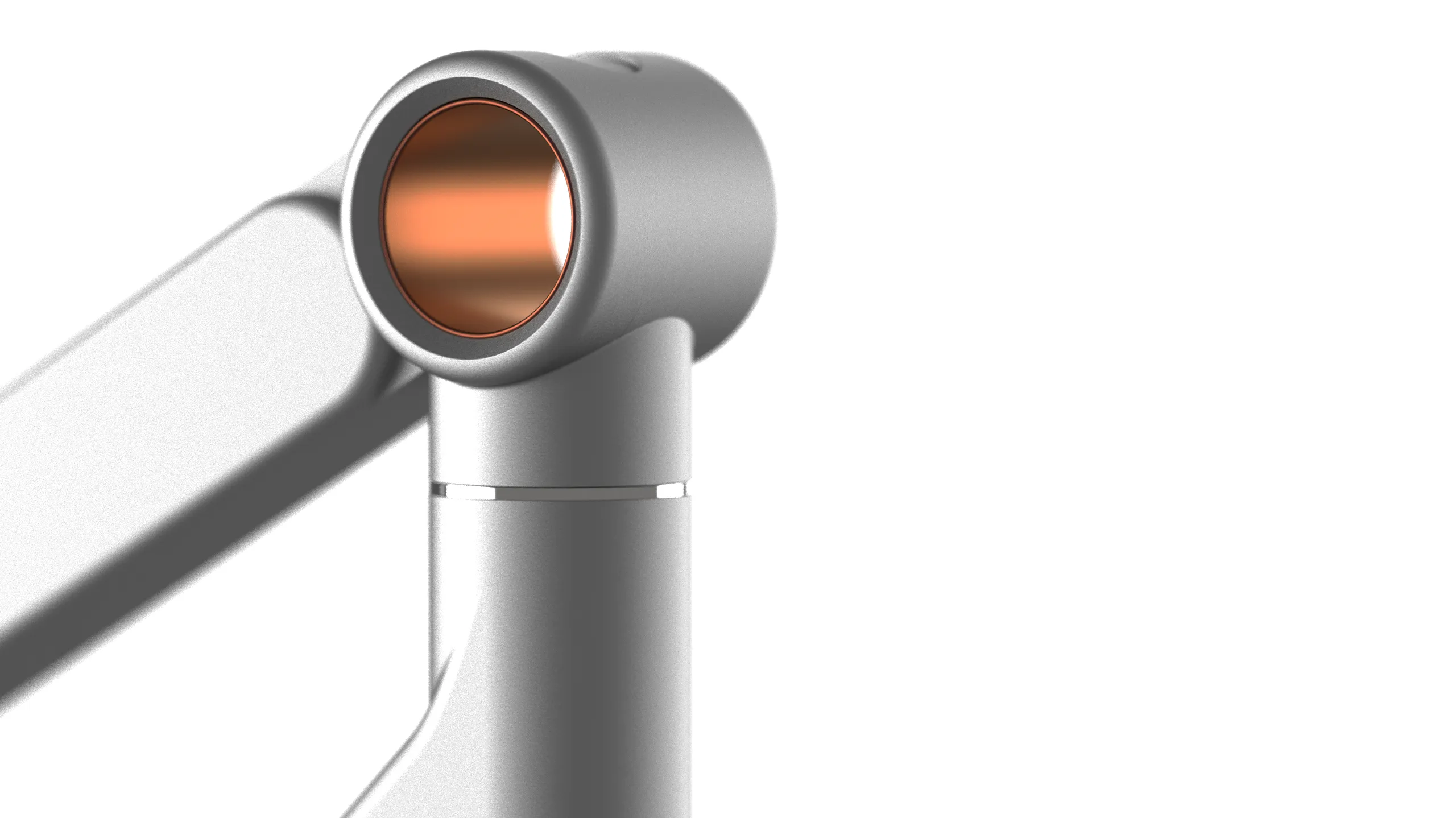
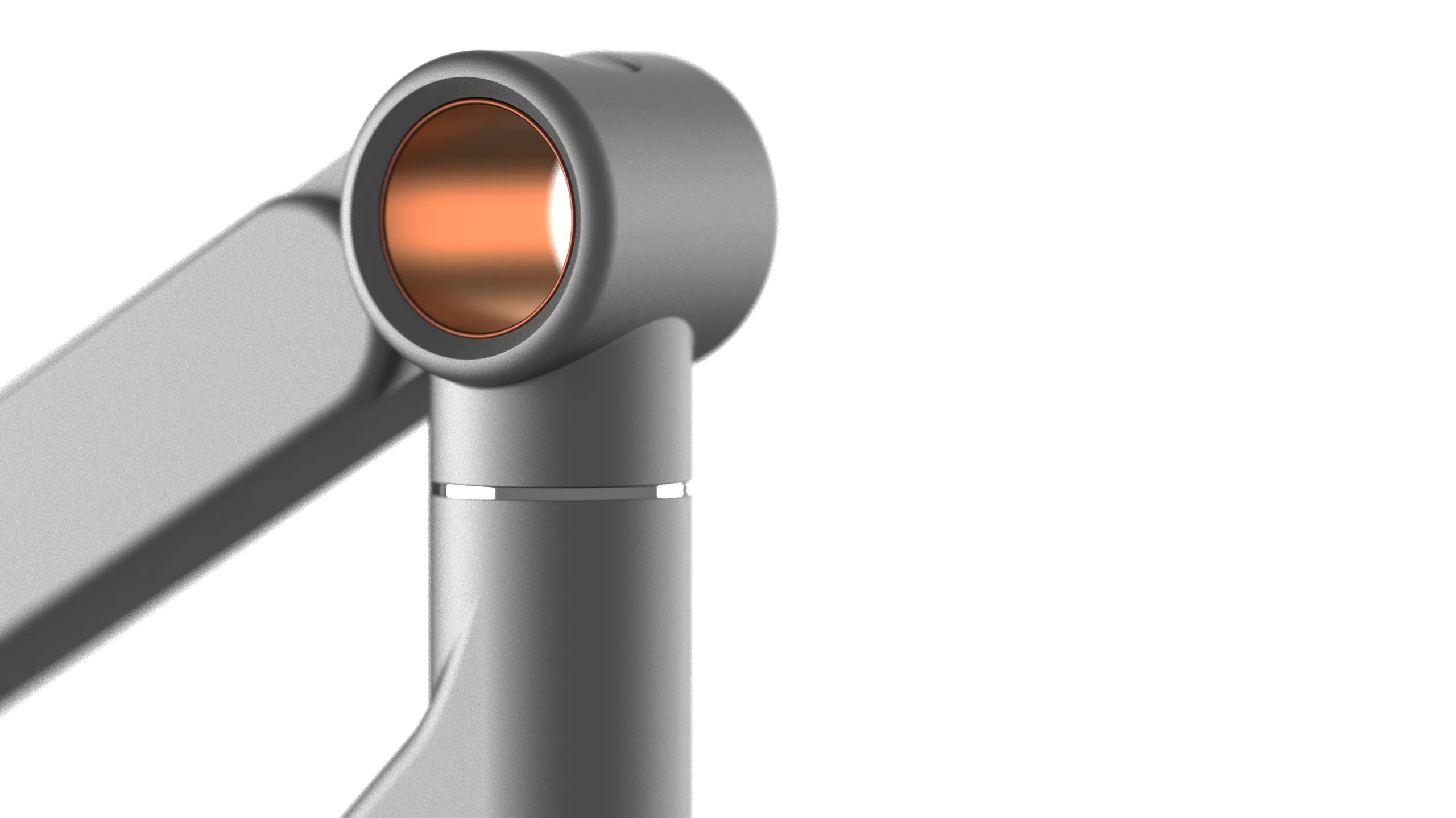
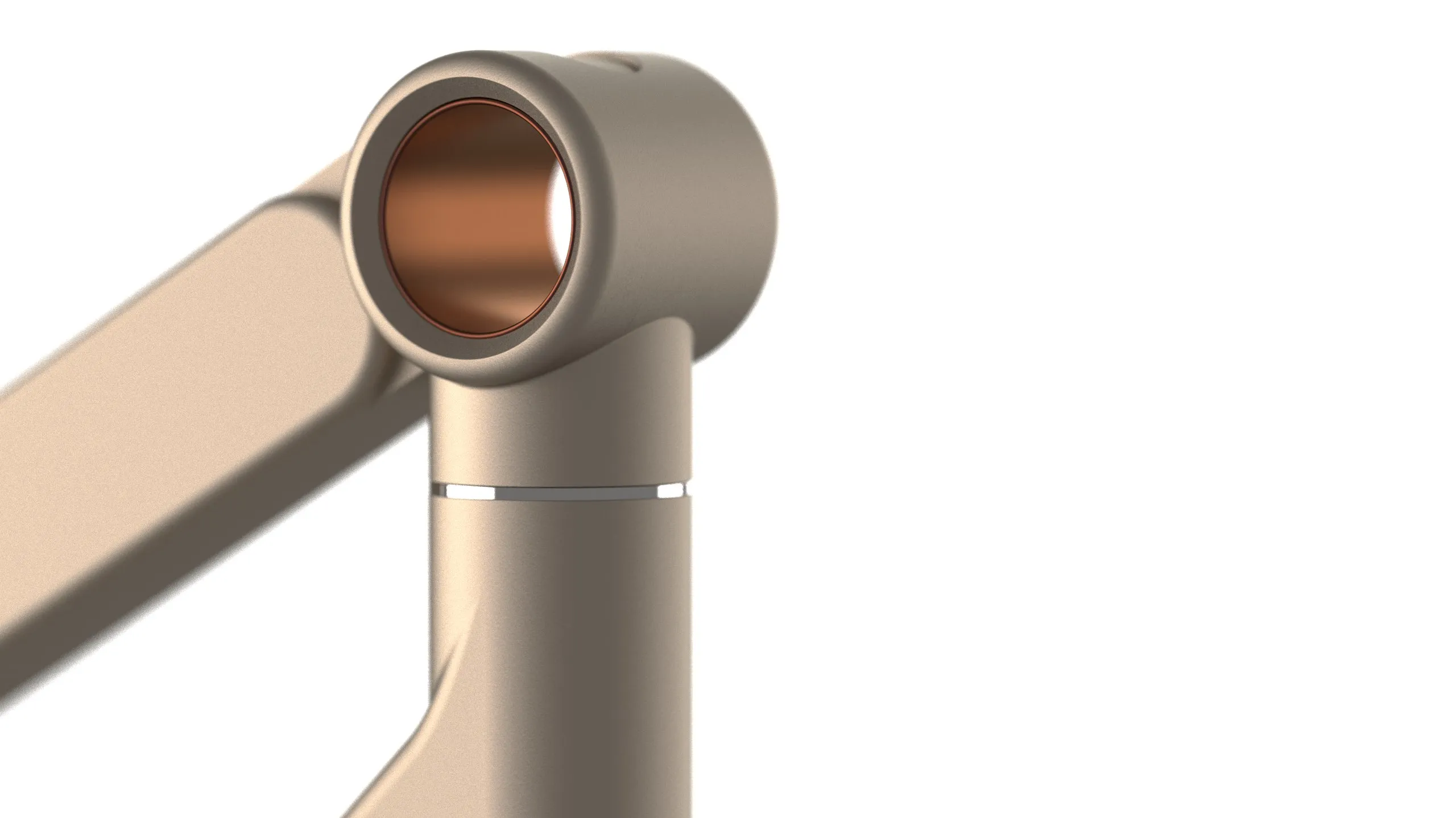
The hollow ring apertures at the elbow (Ø45mm) and head (Ø30mm) are the visual nucleus. Where the arm articulates, the structure is exposed. The reddish anodised accent ring is the one detail that does not vary across all four variants.
The structural problem
The product cannot be built as designed.
External structural review identified the product as unimplementable. The form language is resolved. The mechanism is not. The kinematic chain, joint implementation, and load path were never formally specified — because the engagement was scoped as form design only.
The brief was: design a premium monitor arm. No one asked what makes a monitor arm work. That question was not part of the scope.
Translating form to architecture creates more problems than translating architecture to form. The form assumed a structure that cannot exist.
What architecture would have asked first
The questions form cannot answer.
Signal Sprint™ interrogates the brief before any visual work begins. Had it been applied here, these are the structural questions the Define stage would have surfaced — before a single rendering was made.
The colour family
Four finishes. One form language.
The lesson
Architecture before execution.
Not a philosophy.
A structural requirement.
Most studios document successful projects. This case study documents a structural gap — exactly why it happened and what would have prevented it.
The form is excellent work. The architecture was never done. When structural review arrived, the form could not absorb what it needed to become. Had Signal Sprint™ been applied first, every question in §04 would have been on the table before a single polygon was modelled.
Form that precedes architecture looks right and fails in implementation. Architecture that precedes form looks right and holds under review.
The define stage that changes everything
Start with Signal Sprint™.
Architecture before execution. The structural questions answered before the form makes them impossible.